
Liner Notes — All Albums
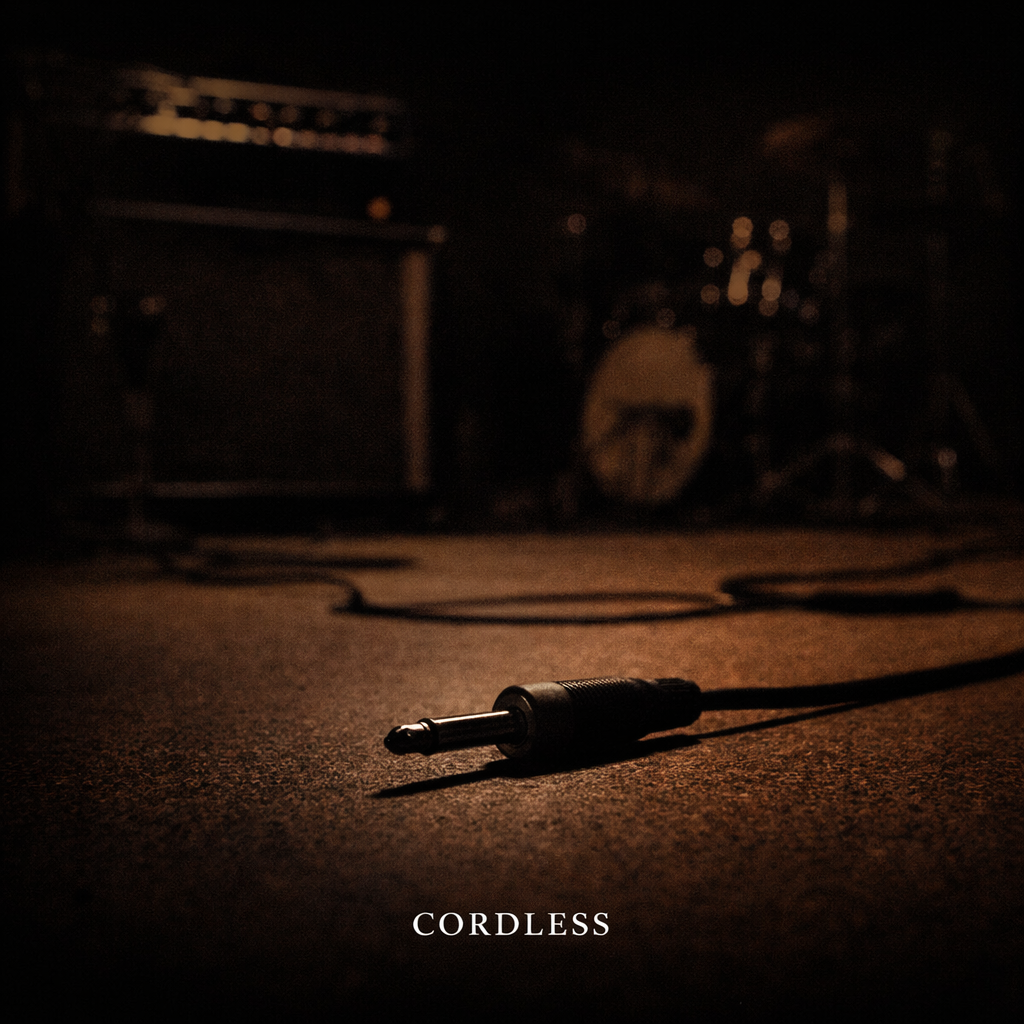
Cordless
2023— SABLE VOSS, DULUTH PARKING LOT, 2017
A note from Eli
I didn't want to make a loud record. That's the truth. I kept saying eventually and Sable kept waiting and then one day I was at a show in a basement in Chicago and a band I'd never heard of played so hard the walls sweated and I drove home at 2am and wrote "Cut the Line" in one sitting and called Sable and said okay, now.
Cordless is not a betrayal of the first two records. It's what happens when you stop being careful about yourself. The hangers are gone. The doorframes are gone. It's just people now — loud, uninsulated, making noise because the noise is honest.
We went to Chicago because we needed to be somewhere that didn't know us. Mae Okoro produced and she was not gentle with us and that was exactly right.
Sable's note
Four years. That's how long I waited for Eli to get loud. And when "Cut the Line" came through on a voice memo at 2am — I just smiled. Because I knew that song. I'd been hearing it in everything he'd written since 2019. It was always in there. It just needed more room.
This record is the one I'll play first if anyone ever asks me what we are.
Track Notes
E: Written in one sitting. The most effortless song I've ever made and the one that scared me the most. Starting with it was Mae's call. She was right.
E: About phones. About the specific grief of a technology becoming obsolete. Also not about phones at all.
S: It's about freedom. It's obviously about freedom.
S: Written about Eli. He knows.
E: I know.
E: About an argument that made complete sense in the moment and complete nonsense three days later. The structure was airtight. The foundation was wrong.
E: I wrote this for her and then got too embarrassed to tell her what it was called until we were already in the studio. Mae told her. I was in the bathroom.
S: I came and found him in the bathroom and said thank you through the door.
E: That was a good moment.
S: About bad reception. About choosing the noise over the silence because at least the noise means something's trying to reach you.
S: My title. His song. He knows what it means. I know what it means. That's enough.
E: A love letter to every terrible show we played before we knew what we were doing. I miss those shows sometimes.
E: About therapy, if you want it to be. About rewiring a lamp, if you don't.
E: The thesis statement of the record, tucked near the end where you have to earn it. I spent four years being careful. This song is the cost of that. Also the release.
E: A circuit needs to be closed to carry current. An open circuit carries nothing. This song is about leaving something open on purpose and trusting that that's the right call.
S: We played this one last in the studio, full band, all the lights on. Nobody talked after. Mae stopped the tape and just sat there. That's how you know.
Gear
Dedications
For Mae, who made us louder and better and didn't apologize for either. For Rook, first time in the room with us and already indispensable. For the four people at that show in 2018 — one of whom was asleep — thank you for staying.And for Dennis. We still have your drum machine. We lied in the last record's liner notes. We're sorry, Dennis.
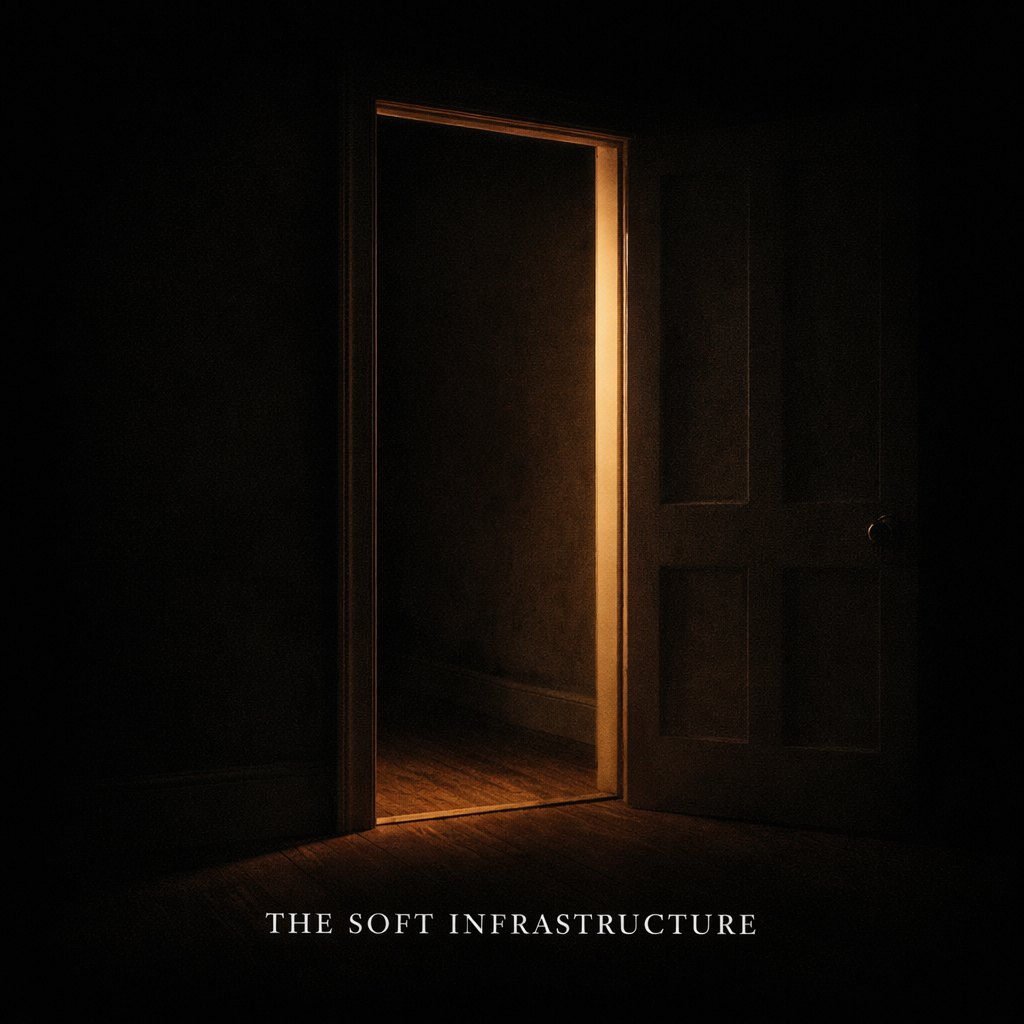
The Soft Infrastructure
2021— FOUND WRITTEN IN A LIBRARY BOOK, DONOR UNKNOWN
A note from Eli
Between Custos and this record, something shifted. I started writing about rooms instead of objects. About the spaces between people — doorframes, thresholds, the strip of light under a closed door. I think I was trying to figure out what holds things up when you can't see the structure.
Sable and I were also figuring out what we were to each other — as collaborators, as friends, as people who spent an unreasonable amount of time in the same car. The Soft Infrastructure is the sound of two people learning each other's weight.
We used a drum machine for the first time. A borrowed Roland TR-505 that belonged to Sable's neighbor Dennis. Dennis: we're sorry we kept it so long. It's in the mail.
Sable's note
This is the record where I stopped being a guest and started being a co-writer, even if the credits don't fully show it. "February (Doorframe Sessions)" is mine, lyrically. Eli wrote the melody. We fought about the bridge for a week and then at midnight we both just stopped fighting and the bridge was suddenly obvious. That's what this whole album was like.
The lap steel is more present here. I wanted it to sound like something bending without breaking.
Track Notes
E: About usefulness. About being necessary in ways nobody notices.
E: The room you don't go in. Every house has one. You know the one.
S: Mine was the basement. His was the attic. Neither of us goes into the other's.
S: Mine. About standing in a doorway for so long you forget which side you were trying to get to.
E: The drum machine enters for the first time. Sable pushed for it. I resisted. Sable was right. This is a pattern.
E: The indent a nail leaves in a wall after you remove it and the painting it held. The absence that has a shape. I have been writing versions of this song my entire life.
E: Recorded at 1am, exhausted. Sable plays keys — the only time on the record. I sat on the floor and sang straight up at the ceiling.
S: It was the best take of anything we've ever done. If we're being honest.
Gear
Dedications
For Dennis, whose drum machine deserved better. For every doorway we've stood in too long. For the version of this record that was too long — you were good too, we just couldn't keep you.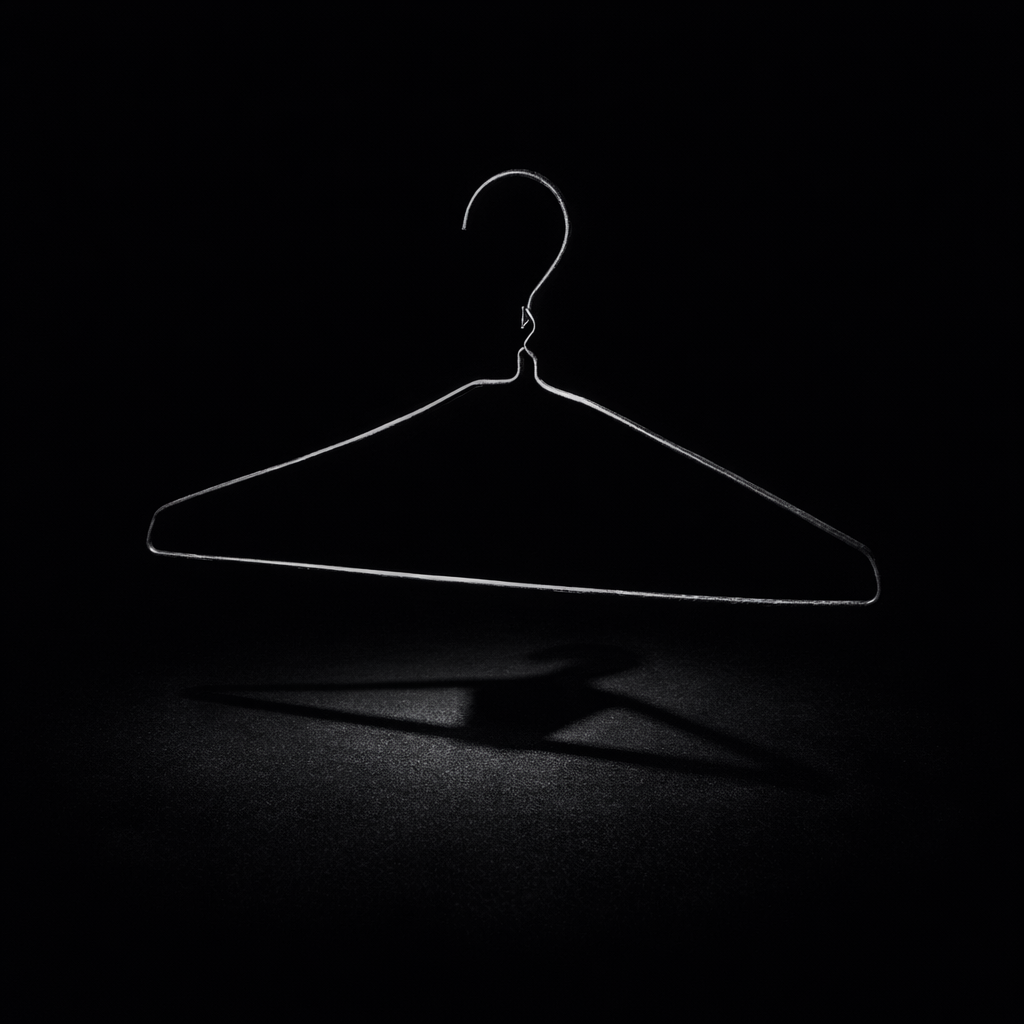
Custos
2019A note from Eli
I made this record because I didn't know what else to do with these songs. They'd been sitting in a shoebox — literally, on cassette, in a shoebox under my bed — for about two years. Sable told me in October that if I didn't record them properly by December she was going to do it herself and release them under her own name. I believed her.
Every song on this record is about an object. That wasn't a concept I planned — I just looked back at everything I'd written and realized I'd been circling things instead of people the whole time. A wire hanger doesn't leave. It doesn't lie. It just holds what you give it and waits.
This record is the closet. Everything after this is what happens when you open the door.
Sable's note
I'm barely on this one and I'm okay with that. Three tracks, some lap steel, one harmony vocal on "Something to Hang On To" that Eli almost cut because he said it made the song "too pretty." I told him pretty wasn't a crime. He left it in. You're welcome.
There's a difference between someone who writes songs and someone who can't stop writing them. Eli is the second kind. Custos is proof.
Track Notes
E: The first song I wrote that I didn't immediately throw away. Written in 2016 on the floor of a closet during a party I didn't want to be at. The wire hanger was just there.
E: For my mother. She irons everything. Still. In 2019. She irons dish towels. I used to find it embarrassing. Now I find it one of the most quietly radical things I've ever witnessed.
E: Albert J. Parkhouse invented the wire hanger in 1903. He never patented it. His employer did. He died having made nothing from the thing he made. I think about that a lot.
E: There were seventeen wire hangers on the rod in my childhood closet when I came home to record this. I counted them while the tape was rolling. That's the intro.
E: Galvanization is the process of coating metal in zinc to protect it from rust. This song is about what we do to ourselves to survive. The coating. The cost of it.
E: Sable plays lap steel on this one. When she sent me the take I sat in my car for ten minutes before I could go back inside.
S: I knew what that song needed. Simple as that.
E: About my dad. That's all I'll say.
E: Named for the year Parkhouse invented the hanger. Recorded at 2am on the final night, one take, the space heater dead, wrapped in a blanket. You can hear the cold in it if you listen closely. I left it in.